Products List
Applications of Nylon Thread Filament
Applications of Nylon Thread Filament
With the continuous advancement of the textile industry, traditional textile materials have become increasingly inadequate in meeting modern production demands regarding elasticity, strength, and other performance metrics. In response, nylon thread filament—a high-tenacity sewing thread composed of multiple intertwined continuous filaments—has emerged. Beyond delivering excellent overall performance and exceptional seam strength, this multi-ply twisted structure offers superior sewability, ensuring stable stitch formation even during high-speed sewing operations.
Nylon is the generic name for polyamide fibers, commonly known as Nylon, and is a type of synthetic fiber fabric. Nylon thread filament, formally termed polyamide filament, consists of continuous fine filaments produced via a melt-spinning process from polymers (polyamides, commonly known as nylon). It stands as one of the primary varieties utilized within the chemical fiber textile industry. In essence, nylon thread filament serves as the core raw material for many lightweight yet robust fabrics in our daily lives, durable ropes, and precision industrial textiles.
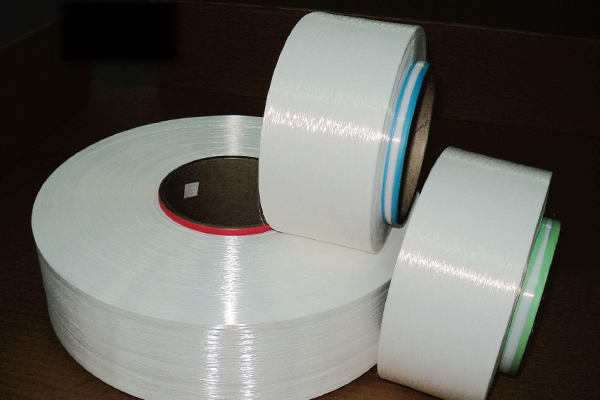
Applications of Nylon Thread Filament
I. Civil Textile Sector
Within apparel and home textiles, nylon thread filament primarily addresses requirements for "comfort," "durability," and "aesthetics."
Sports & Outdoor Apparel
- Applications: Sports bras, swimwear, yoga pants, quick-dry garments, outer shell fabrics for hardshell jackets, down jacket linings, hiking shoe uppers.
- Core Value: Utilizes nylon’s high elastic recovery to provide muscular support; leverages its lightweight nature to reduce athletic burden; serves as an ideal substrate for waterproof and breathable coatings, granting outdoor gear windproof and water-repellent protective functions.
Fashion & Intimate Apparel
- Applications: Pantyhose, stockings, lace trims, shirt linings, seamless underwear.
- Core Value: Employs nylon’s excellent dye affinity to achieve vibrant colors; utilizes its silky luster and superior drape to enhance fabric quality; as a base material for underwear, its smooth texture significantly improves wearing comfort.
Home Textiles
- Applications: Loop pile carpets, curtains, bedding, upholstery fabrics.
- Core Value: Capitalizes on nylon’s high abrasion resistance to withstand furniture friction and foot traffic; uses its stain-resistant and easy-to-clean properties for simplified maintenance; modified variants (e.g., UV-resistant) used in curtains effectively block direct sunlight, thereby extending product lifespan.
II. Technical Textiles Sector
In industrial applications, nylon thread filament functions as both a structural and functional material.
Transportation & Safety Protection
- Tire Cord Fabric: Nylon thread filament serves as the skeleton material for heavy truck and aircraft tires. It must possess high initial modulus and fatigue resistance to endure significant deformation and impact during operation.
- Automotive Safety Systems: Applied in seat belts and airbags. By leveraging its high strength and toughness under instantaneous impact, it effectively restrains occupants or deploys airbags during emergencies, safeguarding lives.
Marine Engineering & Industrial Ropes
- Applications: Trawling nets for ocean-going fishing vessels, deep-sea aquaculture cages, port handling slings, industrial lifting ropes and cables.
- Core Value: Takes advantage of nylon’s low density (significantly lighter than steel wire) to reduce load weight; utilizes its impact resistance and fatigue endurance to ensure integrity against repeated stress or wave impacts without fracturing.
Filtration & Separation Media
- Applications: Industrial high-temperature dust filter bags, vibrating screens, papermaking fabrics (wires and felts).
- Core Value: Relies on nylon’s chemical corrosion resistance (particularly alkali resistance) and high abrasion resistance to maintain structural integrity in harsh industrial environments, effectively capturing dust particles and extending equipment replacement cycles.